Kajabi vs GoHighLevel: Which Platform Fits Your Business?
Kajabi is usually the better fit for most online course and membership creators, while GoHighLevel is usually the stronger choice for agencies and service businesses that need a CRM and multi-channel automation. GoHighLevel emphasizes lead generation, pipelines, and client management across email/SMS/calls, whereas Kajabi prioritizes course delivery, community, and a simpler creator-first build-and-sell workflow. If your revenue depends on managing multiple clients and complex automations, lean GoHighLevel; if it depends on selling digital products with a polished learning experience, lean Kajabi.
- 📈 Business Fit: GoHighLevel is ideal for agencies needing CRM and lead management, while Kajabi suits digital creators focusing on course and membership sales.
- 🏷️ White-Label vs Mobile App: GoHighLevel’s white-label SaaS mode supports reselling your own branded software; Kajabi’s mobile app helps students consume LMS content and boosts retention.
- 🛠️ Customization vs Simplicity: GoHighLevel offers deeper technical customization for complex automations, whereas Kajabi provides an intuitive interface for quick course creation and delivery.
- 💰 Pricing and Value: Kajabi can start at $143/month for solopreneurs, while GoHighLevel starts at $97/month and can pay off when you need CRM + multi-channel follow-up.
- 🚀 Scalability: GoHighLevel scales well for agencies managing multiple clients, whereas Kajabi supports creators expanding their digital product offerings.
What are the key differences between GoHighLevel and Kajabi?
GoHighLevel is built for agencies and service-based businesses that need CRM + lead gen + client management, while Kajabi is built for digital creators who sell courses, memberships, and other digital products with a more guided content-and-community experience.
The core difference is the center of gravity of each platform. GoHighLevel organizes your business around contacts, pipelines, conversations, and automation—ideal when you’re nurturing leads and managing ongoing client relationships. Kajabi organizes your business around products (courses, coaching, memberships), content delivery, and creator-friendly marketing pages.
That distinction shows up in everyday workflows. In GoHighLevel, you’ll spend more time in CRM views, opportunity stages, and automation triggers tied to lead actions. In Kajabi, you’ll spend more time in product/course builders, offers, member management, and content engagement.
| Category | GoHighLevel | Kajabi |
|---|---|---|
| Best for | Agencies, local/service businesses, client-getting systems | Educators, coaches, digital creators selling courses/memberships |
| Core strength | CRM + multi-channel marketing + automation depth | Course creation/delivery + creator-first UX + engagement |
| Primary workflow | Leads → pipeline → nurture → appointment/sale | Audience → offer → checkout → learning/community |
| Learning curve | Higher (more systems to configure) | Lower (more opinionated creator flow) |
Next, it helps to look at how each philosophy—agency automation vs creator delivery—impacts tooling choices.
How does an all-in-one approach compare to specialized tools?
GoHighLevel vs Kajabi isn’t all-in-one vs all-in-one as much as what each platform bundles and what it expects you to optimize.
GoHighLevel’s all-in-one approach is oriented around running acquisition and fulfillment for service businesses: capturing leads, tracking conversations, moving opportunities through a pipeline, and automating follow-ups across channels. Kajabi’s all-in-one feels more like a specialized creator suite: product setup, landing pages, email broadcasts/sequences, checkout/offers, and member experiences in one place.
Choosing between all-in-one and specialized stacks usually comes down to operational friction and cost. An integrated platform can reduce tool-switching and data gaps, but only if its bundled features match your primary business model.
What customization and branding options do GoHighLevel and Kajabi offer?
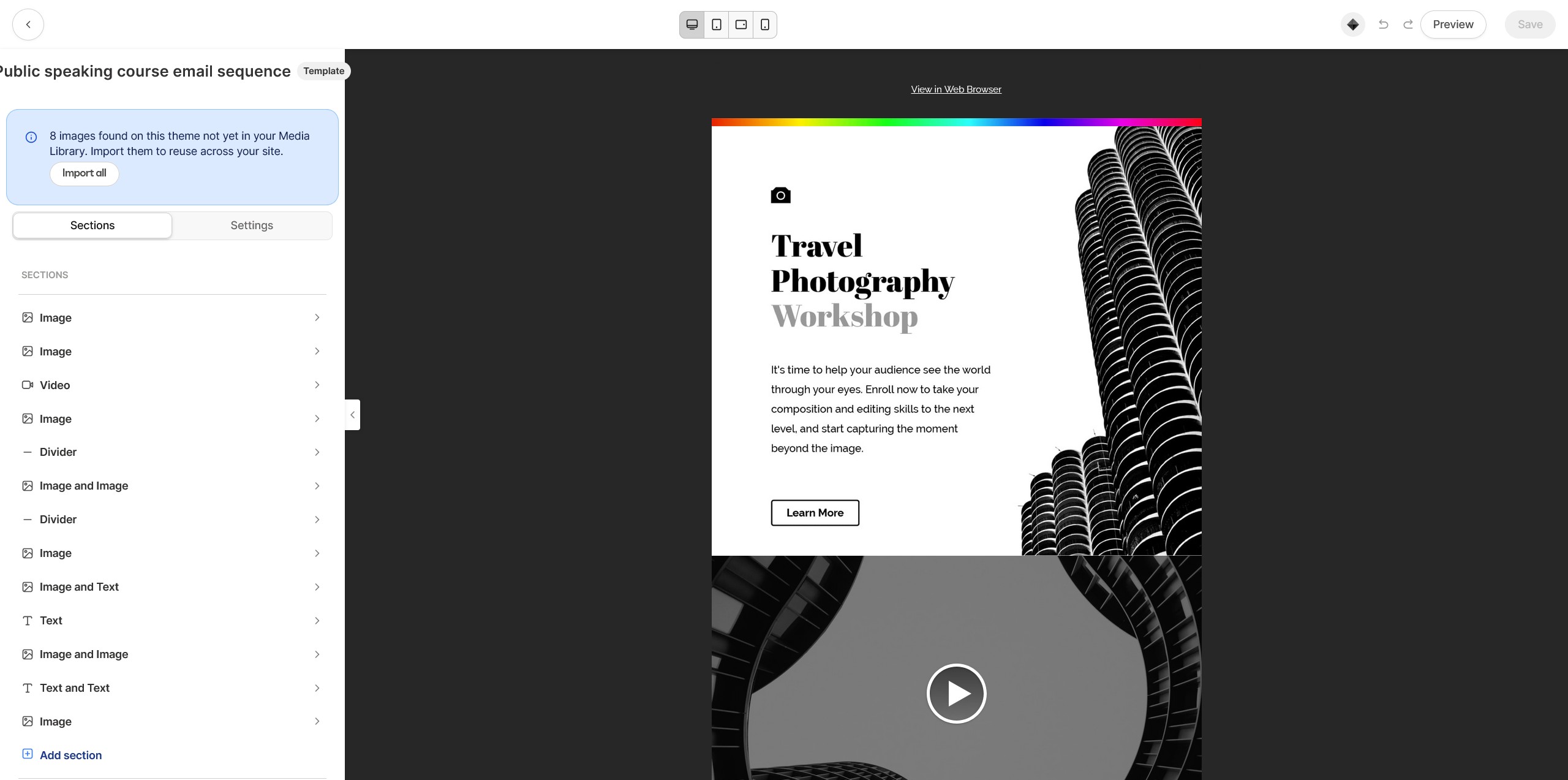
GoHighLevel typically offers deeper technical customization (including custom CSS and more granular funnel/site control), while Kajabi generally makes it easier to produce a modern-looking course site quickly using creator-friendly templates and editors.
In practice, GoHighLevel can feel more functional out of the box, but it gives implementers room to tailor experiences—especially for funnels and agency client deployments. This matters if you’re building distinct brands for clients or you have a developer/tech VA who can refine styles and layouts.
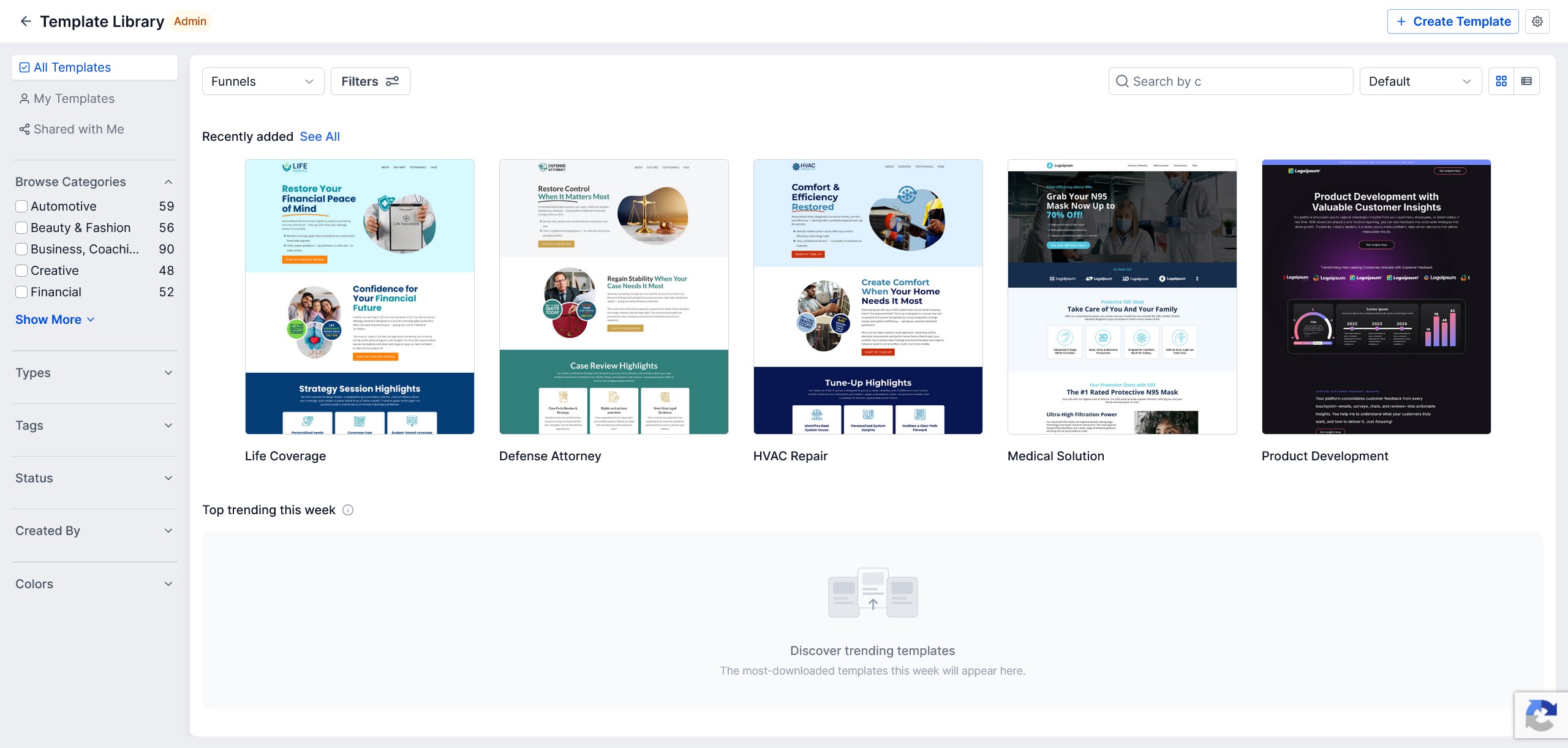
Kajabi’s strength is speed-to-polish. Its website and product experiences are designed so non-technical creators can ship pages that look contemporary without touching code, which is often a better trade-off for solo educators and small teams.
Scalability: Growing an agency vs. scaling digital products
GoHighLevel is generally more scalable for agencies and service businesses managing multiple clients because it’s built around CRM, lead ops, and multi-channel nurture at scale; Kajabi scales well for creators growing a digital product catalog but is less agency-centric.
Scalability means different things depending on your business model. For agencies, scaling often requires repeatable account setups, consistent pipeline stages, and automation that can be duplicated across client contexts. For creators, scaling often means expanding product lines, improving retention in memberships, and increasing conversion rates across a stable funnel.
A major scalability factor for agencies is GoHighLevel's white-label SaaS mode, which allows you to rebrand the entire CRM, desktop app, and mobile app to resell to clients as your own software. Kajabi does not offer white-labeling, but it does provide a highly rated mobile app that allows your students to consume LMS (Learning Management System) content seamlessly on the go, which is a massive retention driver for creators.
GoHighLevel is typically the platform you choose when growth equals more leads, more conversations, more clients, more follow-up complexity. Kajabi is often the platform you choose when growth equals more students, more content, better completion, stronger community and retention.
How do GoHighLevel and Kajabi handle marketing and automation?
GoHighLevel generally provides more robust automation for multi-channel marketing (email, SMS, calls, and more), while Kajabi focuses on creator-friendly email marketing automation that’s typically more linear and less multi-channel.
Marketing capability is where many buyers feel the clearest difference. GoHighLevel is designed to run aggressive lead capture and follow-up systems and to keep sales teams aligned through a CRM. Kajabi supports effective course-launch marketing, but its automation is commonly experienced as simpler and more centered on email and product sales flows.
If your strategy requires sophisticated routing (lead sources, pipeline stages, sales assignment, booking outcomes), GoHighLevel tends to handle that complexity better. If your strategy is to build an audience, run launches, nurture with email, sell offers, then Kajabi typically feels cleaner.
Multi-channel marketing and SMS capabilities
GoHighLevel is known for multi-channel campaigns that can include SMS and other channels alongside email, while Kajabi’s marketing is typically stronger on email and creator-style launches than on deep SMS-first workflows.
Multi-channel matters when conversion depends on fast follow-up and meeting prospects where they respond—especially in local services, high-ticket consults, and appointment-driven businesses. GoHighLevel’s positioning and feature set aligns closely with that use case.
Kajabi can still run strong campaigns, but it’s usually chosen when your primary engagement happens through content, email sequences, and the member area rather than ongoing two-way conversations via text and calls.
How do GoHighLevel and Kajabi visual flow and automation sequences differ?
GoHighLevel typically supports more complex automation logic for funnels and customer journeys, while Kajabi usually emphasizes simpler, more linear email workflows that are easier for creators to manage.
This difference shows up when you attempt branching journeys. With GoHighLevel, you’re more likely to build if/then logic tied to pipeline movement, conversation outcomes, and multiple channel actions. Kajabi often shines when you want straightforward sequences aligned with product milestones (opt-in → nurture → offer → onboarding).
Ask a practical question: “Will I need different automations for different lead types, sales reps, booking results, and reactivation scenarios?” If yes, GoHighLevel’s automation depth is usually the advantage.
What features do they offer for social media scheduling and ad management?
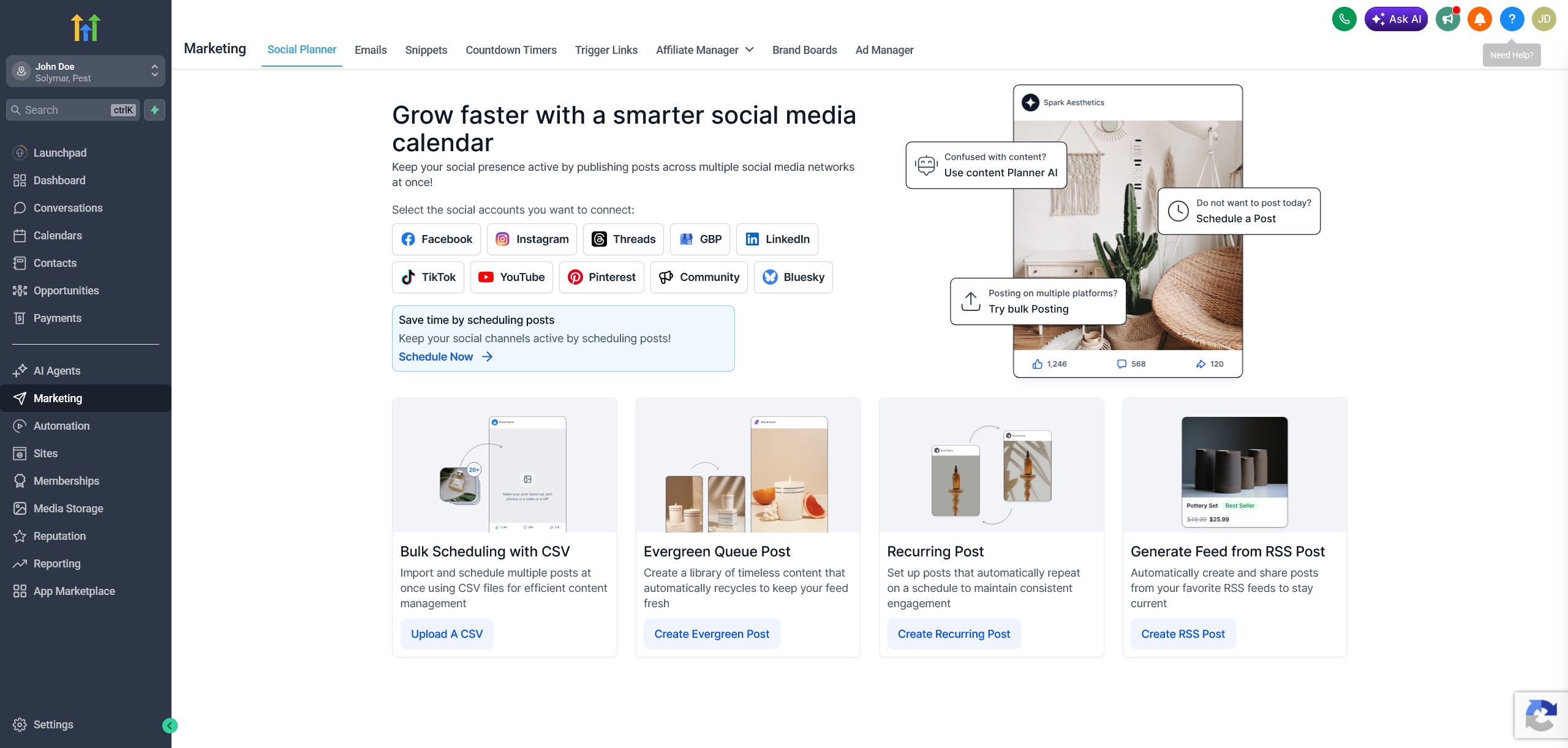
GoHighLevel is generally positioned as a broader marketing operations hub (often including social-related and lead ops capabilities), while Kajabi focuses more on the core creator stack—pages, email, offers, and member delivery—rather than acting as a full ad-management console.
Most businesses still manage ads inside the native platforms (Meta, Google, TikTok) and use their main system for tracking leads and follow-up. In that reality, GoHighLevel’s strength is less about replacing Ads Manager and more about what happens after the click: capture, routing, nurturing, and pipeline visibility.
Kajabi’s strength is the on-site journey and conversion into offers, plus onboarding into the course/community experience. If you want one place to manage the post-ad experience for a course launch, Kajabi is often enough; if you want to operationalize lead handling across channels, GoHighLevel tends to be stronger.
How do the pricing and plans of GoHighLevel and Kajabi compare?
GoHighLevel commonly starts at $97/month (Starter) and offers an $297/month tier (Unlimited), while Kajabi offers multiple tiers and can start as low as $143/month, often providing strong value for solopreneur course creators.
Pricing depends on what you’re replacing. If GoHighLevel replaces your CRM, email, SMS tooling, funnel builder, and appointment systems, the higher base price can be justified. If you mainly need a course platform with marketing pages and email, Kajabi’s entry plan can be more budget-friendly for creators.
Also consider scaling costs: agencies may value a plan structure that supports multi-client operations, while creators may care more about product limits, admin seats, and having no added platform fees on sales.
Which platform offers more affordable and budget-friendly plans?
For many solopreneurs and early-stage educators, Kajabi is often more budget-friendly at the low end, while GoHighLevel can be cost-effective when you need agency-style CRM and automation.
Affordability isn’t just the sticker price—it’s the effective monthly cost after factoring in the extra tools you’d otherwise pay for. Kajabi can be cheaper if your stack is primarily LMS + pages + email. GoHighLevel can be cheaper if it replaces a CRM plus multiple marketing and follow-up tools.
Do they provide a free trial or money-back guarantee?
GoHighLevel is commonly offered with a 14-day free trial; Kajabi frequently offers trials as well, but the exact length and availability can vary by promotion and plan.
Trials matter because both platforms have setup gravity: you only learn the real fit once you build a basic funnel and run a small campaign. Use the trial window to test one real workflow end-to-end: opt-in, nurture, sale, onboarding, and support.
How do transaction fees and sub-account options differ?
Kajabi is widely positioned as having no transaction fees on its plans, while GoHighLevel’s value often shows up in agency-style account structures and the ability to manage multiple client environments via sub-accounts.
If you sell digital products at scale, transaction fees can materially affect margins, so Kajabi’s “no platform transaction fee” approach is attractive for creators. Payment processors can still charge their own processing fees, but that’s separate from platform-level transaction fees.
If you’re an agency, sub-accounts are a major practical difference. GoHighLevel’s orientation toward multi-client management is often a deciding factor because it supports standardized deployments across client businesses.
What are the user experiences like with GoHighLevel and Kajabi?
Kajabi is generally considered more intuitive and creator-friendly, while GoHighLevel often has a steeper learning curve because it includes more CRM and automation depth.
User experience is where power vs simplicity becomes real. GoHighLevel can feel like a toolbox: extremely capable, but you need to know which tools to pick and how to configure them. Kajabi can feel like a guided system: fewer decisions to make, quicker to a polished course business setup.
This is often the deciding factor for solo founders. If you’re doing everything yourself, the time cost of setup and maintenance matters as much as feature lists.
How intuitive are their design and user interfaces?
Kajabi typically delivers a cleaner, more intuitive interface for non-technical users, while GoHighLevel’s interface is often more utilitarian and can take longer to learn due to its broader feature set.
If you want to build a course site, publish lessons, set up an offer, and start selling quickly, Kajabi’s interface usually reduces friction. If you want to manage lead stages, automate follow-ups across channels, and maintain a full sales operations view, GoHighLevel’s UI reflects that operational complexity.
- Kajabi: faster time-to-launch for courses and memberships.
- GoHighLevel: more screens and settings, but more control for marketing ops.
- Best predictor: test one complete workflow during the trial, not just the page builder.
What kind of customer support and community engagement do they offer?
Both platforms provide customer support resources, but Kajabi is especially known for strong creator-oriented support and a broader ecosystem focused on course businesses, while GoHighLevel’s community is heavily agency and marketing-ops oriented.
Support quality isn’t only response time—it’s whether the documentation and community match your use case. Kajabi’s ecosystem tends to focus on launches, offers, course engagement, and creator monetization. GoHighLevel’s community tends to focus on snapshots/templates, client onboarding, automation recipes, and lead ops.
Pick the platform whose community is already solving the problems you expect to face weekly.
Which platform should you choose?
Choose Kajabi if your primary business is selling courses, coaching, or memberships with a polished learning experience; choose GoHighLevel if your primary business is generating leads and managing clients with CRM pipelines and multi-channel automation.
A good decision framework is to choose based on your primary revenue motion. If the business wins when leads are followed up quickly and moved through a pipeline, GoHighLevel is usually the better core system. If the business wins when students buy and stay engaged in a program, Kajabi is usually the better foundation.
To make this concrete, map your one metric that matters to the platform’s strengths: appointments set and show rate (GoHighLevel) vs product conversion and retention (Kajabi).
What should online course creators consider when choosing?
Online course creators should prioritize course delivery features, member experience, and creator-friendly workflows—areas where Kajabi is typically stronger than GoHighLevel for education-first businesses.
Most course creators need consistent execution more than extreme customization. Kajabi is often favored because it reduces technical overhead while covering the essentials of building, marketing, and delivering learning products.
How do business needs influence platform suitability?
Your platform suitability depends on whether you sell services via pipelines (GoHighLevel) or digital products via offers and content (Kajabi), and whether you need multi-client management at scale.
If you run an agency, the operational need to replicate systems across clients is a major driver. If you run a creator business, the operational need is usually to ship content, improve conversion, and retain members with a clean experience.
Don’t decide from feature checklists alone—decide from your operating model: who you sell to, how you deliver, and what your team does daily.
Which platform helps streamline tools for time and focus?
Kajabi typically streamlines a course business by bundling product creation, site/pages, offers, and email in a creator-first flow, while GoHighLevel streamlines a service business by consolidating CRM, pipelines, and multi-channel follow-up into one system.
Tool sprawl usually happens when your core platform doesn’t match your business motion. If you’re a creator using an agency-style CRM platform, you may add extra course tools; if you’re an agency using a creator platform, you may bolt on CRM and SMS systems.
For the best time-and-focus outcome, choose the platform that replaces the most mission-critical subscriptions without forcing you to rebuild your workflows in a way your team won’t maintain.
Frequently Asked Questions
Which platform has better CRM capabilities: GoHighLevel or Kajabi?
GoHighLevel is typically the stronger choice if CRM is central to your business, because it’s designed around pipelines, conversations, and lead management. Kajabi can manage customers and members, but it’s not built to run a sales team workflow with deal stages and intensive follow-up.
Can you use GoHighLevel for digital products like Kajabi?
Yes—GoHighLevel can be used to sell digital offers and run funnels, but the experience is usually more marketing + follow-up than course-first. If your product success depends on a polished learning environment and member engagement, Kajabi is often the smoother fit.
What are the disadvantages of GoHighLevel?
The main trade-off is complexity: it can take more time to configure pipelines, automations, and account structure before it feels simple. It can also feel less creator-centric for course delivery, so you may spend extra effort shaping the student experience compared with a platform built primarily for learning products.
Is GoHighLevel or Kajabi better for marketing agencies?
GoHighLevel is usually better for agencies because it’s built to manage lead flow, client communication, and repeatable setups across multiple accounts. Kajabi can work for agencies focused on building and launching courses for clients, but it’s less optimized for ongoing CRM-driven client management.
GoHighLevel vs Kajabi: Which platform is best for course creators?
For most course and membership creators, Kajabi is the safer default because it prioritizes product delivery, member experience, and a guided creator workflow. Choose GoHighLevel instead if your course is sold through a consultative, appointment-driven funnel where CRM, SMS, and complex follow-up are the main growth levers.
Free Quiz: What's holding back your business growth?
Take this short quiz and discover your #1 growth blocker - so you know exactly where to focus next: